|
COMETS EARTH JUPITER KUIPER BELT MARS MERCURY METEORITES NEPTUNE OORT CLOUD PLUTO SATURN SOLAR SYSTEM SPACE SUN URANUS VENUS ORDER PRINTS
PHOTO CATEGORIES SCIENCEVIEWS AMERICAN INDIAN AMPHIBIANS BIRDS BUGS FINE ART FOSSILS THE ISLANDS HISTORICAL PHOTOS MAMMALS OTHER PARKS PLANTS RELIGIOUS REPTILES SCIENCEVIEWS PRINTS
|
 |
Related Document
Download Options
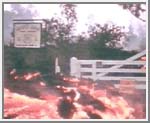
This video clip was taken from "Understanding Volcanic Hazards", © 1995, International Association of Volcanology and Chemistry of Earth's Interior (IAVCEI). The following was taken from the video: Most lava flows move slowly enough for people and animals to move out of the way, but everything else in the path of a lava flow is either burned or covered by molten rock. Even thin lava flows can destroy houses and roads. Farm land covered by lava cannot be used again for many years. Some lava flows move slowly, less than one kilometer an hour and sometimes less than one kilometer in a day. The edges of such lava flows can tower 30 meters high. The leading edges of these flows consist of hot rocks that roll down their steep fronts. People are not in danger from sluggish lava flows like these, as long as they keep a safe distance from the leading edge. But buildings don't stand a chance in the face of an advancing lava flow. |