|
COMETS EARTH JUPITER KUIPER BELT MARS MERCURY METEORITES NEPTUNE OORT CLOUD PLUTO SATURN SOLAR SYSTEM SPACE SUN URANUS VENUS ORDER PRINTS
PHOTO CATEGORIES SCIENCEVIEWS AMERICAN INDIAN AMPHIBIANS BIRDS BUGS FINE ART FOSSILS THE ISLANDS HISTORICAL PHOTOS MAMMALS OTHER PARKS PLANTS RELIGIOUS REPTILES SCIENCEVIEWS PRINTS
|
 |
Related Document
Download Options
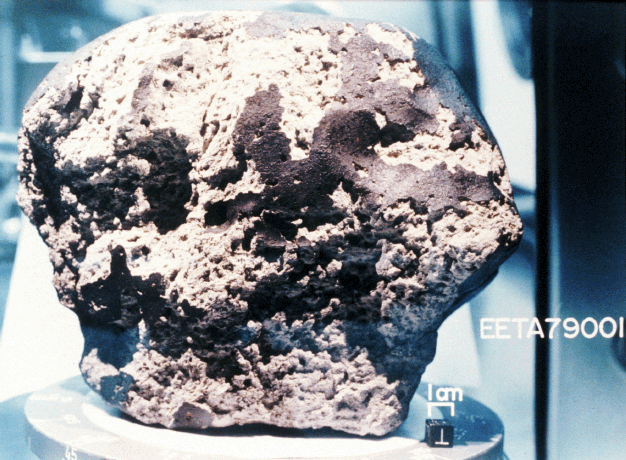
This meteorite, called EETA 79001, was found on the ice in Antarctica, and is quite likely from Mars. For scale, the cube at the lower right is 1 centimeter on a side. The meteorite is partly covered by a black glassy layer, the fusion crust. The fusion crust forms when the meteorite enters the Earth's atmosphere at high speed. Friction heating melts the outer portion of the meteorite. Inside, the meteorite is gray. It is a basalt, very similar to basalts found on Earth. It formed in a volcanic eruption about 180 million years ago. This meteorite is quite likely from Mars because it contains a small amount of gas that is chemically identical to the Martian atmosphere. |